Ruminant
Swine
Volaille

16 March 2026
Heat stress: a major challenge in livestock farming and a growing concern for all sectors
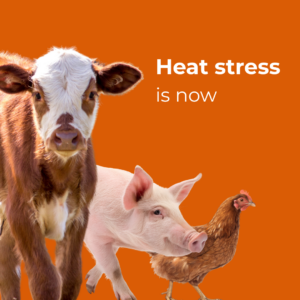
With climate change and the increasing frequency of heat waves, heat stress has emerged as a central issue for animal health, welfare, and performance. All species are affected—cattle, sheep, goats, pigs, poultry, rabbits, and others—but tolerance thresholds and physiological responses vary greatly.
Heat stress directly impacts feed intake, production, behavior, immunity, and reproduction; early signs must be identified quickly to limit economic losses.
Understanding Heat Stress
Heat stress occurs when an animal is no longer able to dissipate the heat produced by its metabolism or absorbed from the environment. Several factors contribute to this:
- High ambient temperature,
- Excessive humidity,
- Insufficient ventilation,
- Metabolic load related to production (milk, growth, egg laying, etc.),
- Age, genetics, and body condition.
The Heat Stress Index (HSI) is now a key indicator, particularly for ruminants. When the HSI exceeds 71, animals enter a risk zone.
Effects common to all species
1- Behavioral disturbances
The latest field reports compiled internally highlight the following:
- huddling together, seeking shade,
- excessive salivation and panting,
- prolonged standing,
- gradual decline in feed intake.
2- Physiological and metabolic changes
Heat stress leads in particular to:
- increased respiratory rate,
- acid-base imbalances,
- redistribution of blood flow to the detriment of the digestive system,
- increased oxidative stress,
- weakened immune system.
3- Zootechnical impacts
The identified technical consequences include:
- reduced growth (ADG),
- worsening feed conversion ratio,
- decline in milk production,
- impaired reproductive performance,
- increased mortality, particularly in poultry and rabbit farming.
Why don’t all species react the same way?
Sensitivity depends on several factors:
- Species: pigs and poultry lose very little heat; ruminants produce a high amount of metabolic heat.
- Size: Larger animals have a harder time losing heat.
- Age and physiological stage: A highly productive adult is more sensitive than a young animal.
What solutions are available to limit the effects of heat stress?
There is no single solution: a combination of environmental factors, diet, and targeted nutritional solutions is required.
1- Adapt the environment
- Enhanced ventilation (circulators, exhaust fans),
- Controlled misting or sprinkling depending on the species,
- Building insulation and design,
- Easy access to water,
- Stocking density management to limit prolonged standing.
2- Adjust the diet
- Split feedings to maintain intake,
- Fresh and stabilized feed (limit heating, use of feed preservatives),
- Appropriate mineral supplementation (DCAD or BE highly beneficial, salt),
- Increased energy density when necessary.
3- Use specific nutritional solutions
- Pack Booster (ruminants): ruminal support, stimulation of feed intake, combating metabolic overload.
- Heatfresh (pigs): maintaining feed intake, limiting cellular damage, activating antioxidant pathways.
- Optifresh (poultry): digestive support and heat stress resistance.
These solutions are based on combinations of electrolytes, antioxidants, vitamins, and plant extracts.
The 48 hours before the heat peak – a critical window during which it is important to take action:
- water management,
- barn comfort,
- liver support (plays a central role in metabolism),
- optimized feeding.
Why act now?
Climate projections confirm a sustained rise in temperatures, while field reports show signs of heat stress in cows as early as 22°C, underscoring the need to intervene before the heatwave.
Taking action means:
- ensuring animal welfare,
- securing technical performance,
- reducing economic losses,
- strengthening the resilience of livestock systems.
Conclusion
Heat stress is no longer a seasonal phenomenon: it is a structural challenge for all sectors. An integrated approach is needed, combining environmental measures, feeding strategies, and targeted nutritional solutions.
Our experts are available to assist you in implementing programs tailored to your species and livestock systems; please feel free to contact them here
 Menu
Menu